
StadiumPosts Logo
Stay upto date with notifications from Stadiumposts
Notifications can be managed in browser preferences

FERRARI TURMOIL: HAMILTON IN; WILL CHARLES LECLERC LEAVE THE SCUDERIA
As Lewis Hamilton pushes his Ferrari blueprint for a title revival, Ralf Schumacher warns Charles Leclerc to have a Plan B. With three races left, can Hamilton's cultural reset mirror the Schumacher era and lead Ferrari back to the top?
Ferrari Turmoil: Hamilton In; Will Charles Leclerc Leave The Scuderia
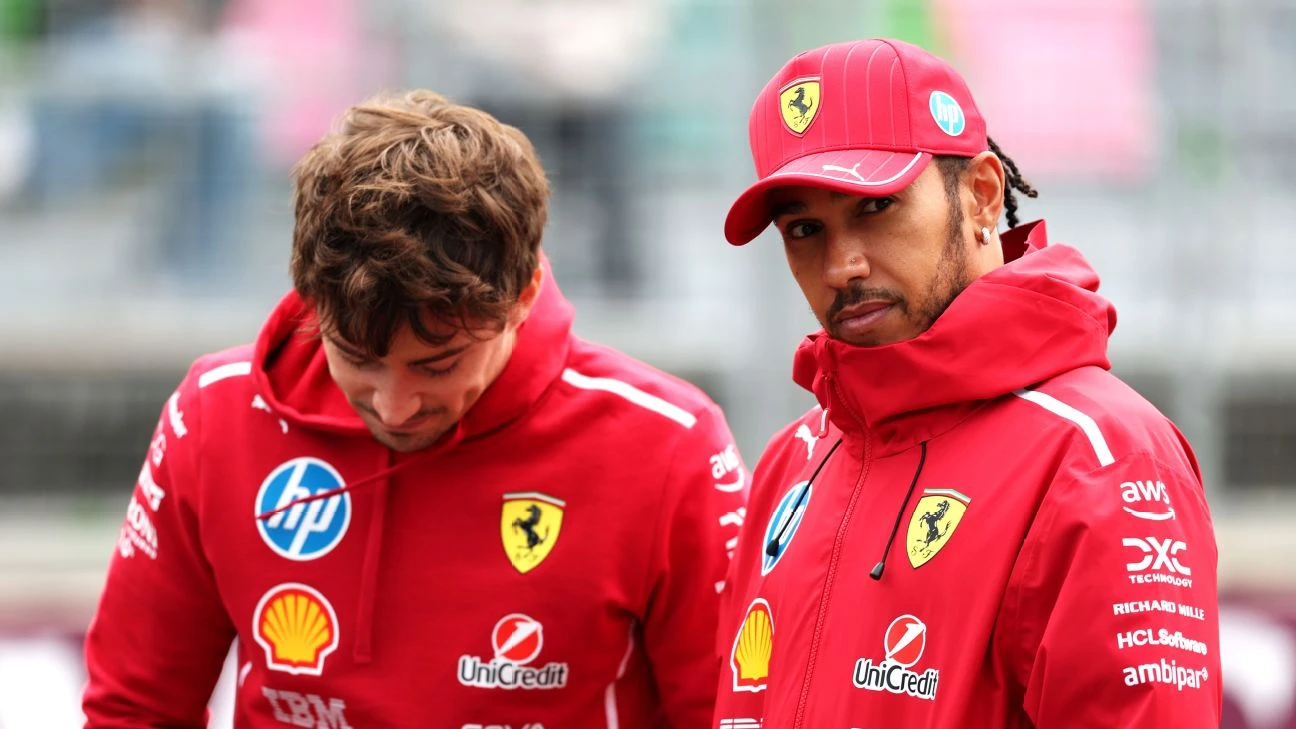
Lewis Hamilton and Charles Leclerc - Photo Credit: Getty Images

Hamilton's plan for Ferrari and a throwback to the Schumacher era


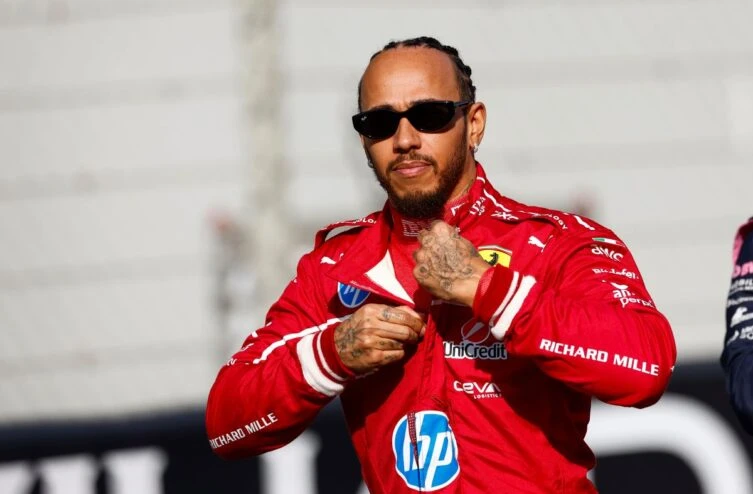
The purpose of Lewis Hamilton's visit to Maranello was not to play tourist. To pull Ferrari out of its title famine and chase number eight, he crossed the aisle. A growing chorus within the squad is demanding that Ferrari allow him to take the lead.

Former Ferrari mainstay Francesco Cigarini, who was part of the team during the Schumacher era, believes Hamilton can initiate a similar cultural revolution, but only if the Scuderia fully supports his path. To put it another way, pay attention, adjust, and design the vehicle and the crew to meet his needs. The extra kicker? If the team's vision is combined rather than divided between two driving philosophies, Charles Leclerc might also gain from that strategy. Because everyone in the organisation was singing from the same sheet, the Schumacher playbook was successful. A new one is what Hamilton is attempting to write.


Leclerc advised having a trapdoor on standby.


Ralf Schumacher has also thrown a grenade from the sidelines, saying that Leclerc needs to come up with a backup plan. This follows John Elkann, the chairman of Ferrari, publicly advising his drivers to "speak less." Schumacher believes Leclerc needs leverage, or at the very least, an escape hatch, if the competitive arc does not bend quickly enough. It is the kind of message that lands differently when results are not flowing.

At Maranello, Leclerc is ensnared, committed, and loved. Contracts, however, do not alter physics. The rumours about other options will not cease if Ferrari fails to perfect the latter stages of development. That is the situation close to the 2025 sharp edge of Formula One.

Zak Brown prods the bear once again.


Zak Brown has never shied away from a headline at McLaren. His most recent? Hamilton had previously been the target of Max Verstappen's "too aggressive" behaviour in Brazil. Where to draw the line between reckless risk-taking and elbow-out genius is a well-known argument. Reputations are not the only factor; stewards, optics, and how drivers adjust when tripleheaders and title pressure intersect are also important considerations.

For Vegas, Williams goes noir.


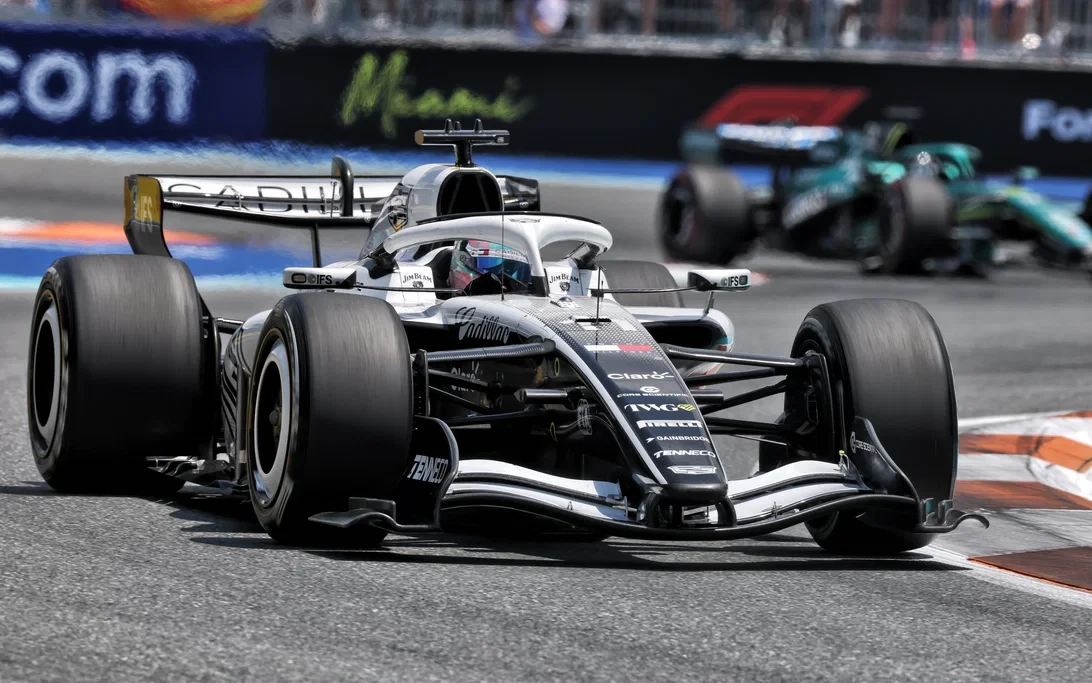
Williams is turning black under the neon, which is on the lighter side (or darker, literally). The Grove team is obviously embracing the showmanship of the U.S. swing, as seen by the fact that this is their third special livery in four races and their second one-off in a row. A mostly black automobile should appear mean under the lights of Las Vegas. Another question is if it is quick down the Strip.

Sauber's "last lap" acknowledgement before the Audi era


In addition, Sauber is getting ready for Vegas by revealing a "last lap" livery with chequered flag motifs as the team approaches its 2026 conversion to the Audi works project. It is a prelude to the rebranding and a clever, nostalgic touch. Do not expect the farewell race just yet; call it a farewell tour.

With just three races left, where does that leave us? Ferrari must decide whether to fully implement Hamilton's template, which includes the driver-first setup philosophy, data-led development, and precise demands, or to keep balancing two ideas and hope that skill will make the difference. It is about picking a clear path and taking both drivers along with it, not about picking Hamilton over Leclerc. Dynasties are established in this manner.

The math is easier for Leclerc. If the package shows up, he is faithful and quick enough to win large in red. Just because he has a backup plan does not ensure he will employ it. It indicates that he is listening.

Additionally, the stakes for Vegas, the penultimate stop, and the finale are rising as McLaren and Red Bull continue to circle each other with chilly compliments and warmer insults. The margin is one overtake, one penalty, and one safety car.

Three races. Old grudges, new liveries, and a championship photo that yet defies neatness. This run-in has teeth, so buckle up.

DISCLOSED: WHY FORD EXPANDED THEIR F1 ROLE TO INCLUDE FULL COMBUSTION ENGINE DESIGN

Red Bull and Ford begin secret 2026 engine testing in Barcelona. Learn why Ford is now focusing on combustion engine development.

top-news
Mark Rushbrook confirms Red Bull-Ford 2026 engine

Later this month, the Red Bull teams will try out their brand-new, in-house engine for the first time. Even though the Barcelona winter test won't be open to the public, it's still a key test for Ford and Red Bull.

Ford Performance director Mark Rushbrook said the test will show if the last three years of work were worth it in making a top-notch engine.

Ford's New Plan: More Focus on Gas Engines

Over the years, Ford's role behind the scenes has grown bigger than first planned.

In early talks, led by Christian Horner for Red Bull, Ford was going to help with the electric parts and give money to the project. Since then, it's grown to include 3D printing and more, according to Rushbrook.

The initial plan was on the electric side: the battery, motor, inverter, software, and calibration. "We've done that," Rushbrook told Motorsport.com.

But what we didn't expect, and wasn't our main focus, was the gas engine. That changed as our car plans changed.

With Ford Motor Company's bigger plan, the F1 project with Red Bull Powertrains changed a bit.

Our car plans will still have gas engines, hybrids, and fully electric cars. So, it got more important for us to help with the gas engine too.

Ford wants to use what they learn from F1's gas engines in their road cars, which wasn't the plan at first with Red Bull.

As we worked on the electric side and saw the gas engine work, we saw a chance to get involved. A lot of parts made in Dearborn, Michigan, USA, are now for the gas engine. These parts are made and shipped every day.

Rushbrook said that Ford's bigger role in the gas engine doesn't mean Red Bull Powertrains wasn't good enough on its own.

It's not that they were lacking, but when smart people work together, they share ideas. They ask, 'What would Ford do?' That's where we could help.

What Does F1 Offer Ford?

Rushbrook thinks the project has gotten better with this approach, and it's made F1 more important for Ford.

On the electric side, like the battery chemistry, we helped and learned a lot. The software and calibration are where we've helped the most from our past work.

But for the gas engine, there's the design, making the parts, 3D printing, and more. It's pushed us to a new level. The people, the quality control—it's all better.

Will Ford Stay in F1 Longer?

Ford's ongoing production of gas-powered cars is tied to F1's future value.

Talks about the engine rules after the current cycle started in 2025. FIA president Mohammed Ben Sulayem first wanted a V10 but then changed it to a V8 with electric help.

If Ford keeps making gas engines, is that enough, or do they want to stay in F1 past 2030?

We know our plans. We'll have gas engines, hybrids, and fully electric cars for a while, especially since global rules are now more local. We want to race to help our innovation and tech.

Because Ford now works with all kinds of engines for their cars, they're open to F1's future.

We're okay with different balances of gas engines, hybrids, and full electric. As long as it's useful to us, we're happy. Rushbrook added.

We know there's give and take in racing. We have a lot of room for that. What's being talked about now is okay with us.

When asked if that includes a V8 with some electric power, Rushbrook said, Yes.

This makes a longer partnership with Red Bull after the current cycle a real idea, as Ford has said the investments are for the long haul.

THE "ICE SECRET": HOW LEWIS HAMILTON FIGHTS AGE TO STAY COMPETITIVE WITH FERRARI

Lewis Hamilton reveals his "non-negotiable" 2026 routine. From 8-mile runs to ice baths, see how the Ferrari star defies age.

top-news
Hamilton’s 2026 Ferrari secret?

Lewis Hamilton has clinched world titles thanks to his speed, skill, and nerves of steel. Now at 40, he's facing a different kind of challenge: Father Time, muscle stiffness, and the wear and tear that come with two decades in Formula 1.

His secret weapon? Discipline. And, most painfully, ice.

As he begins his 20th F1 season—his second with Ferrari—the seven-time world champ speaks openly about how his physical routine has changed as he's gotten older, moving from fitness that came naturally to a far more planned approach.

The goal is simple: remain competitive in a sport that's tough on those past their prime.

"It's changed, developed, and grown," Hamilton told Men's Health.

Once optional things are now must-dos. What he once skipped is now scheduled. And the thing that hurts the most is what he refuses to give up.

Morning Runs and Cold Plunges

Hamilton doesn't train like a carefree twenty-something anymore. Now, every morning starts the same way—and it's not with a stopwatch.

I still love to run—I ran this morning. I go for runs that vary from six to eight miles. Then I take an ice bath. But before any of that, stretching is the first thing I do when I get out of bed.

The order is important. Stretch first. Run next. Freeze later. It's a routine that helps keep his muscles loose, his weight in check, and recovery a priority—something Hamilton admits he used to ignore.

When his schedule allows, his afternoons are less about intense workouts and more about control.

In the afternoon, I might do a HIIT workout, but I can't lift too many weights because I get too heavy. So it's mostly Pilates and yoga.

It's very different from his early years, when natural fitness and youth carried him. Now, lasting power is carefully built.

Even with a schedule that goes beyond racing—fashion, music, advocacy—Hamilton insists on certain training boundaries. When asked what he refuses to skip, his answer was quick.

Ice baths. Recovery is something I didn't focus on much in the past. "I would just do the workout and then go on with my day," he said.

So stretching and ice baths—those are the two things that I make myself do.

Make is the right word. He doesn't enjoy ice baths; he just deals with them. But Hamilton thinks the discomfort is the point.

Training the Mind, Too

For Hamilton, physical preparation easily turns into mental strength – a key advantage during a long 24-race season.

When I was younger, I think training was really my therapy—and in some ways it still is, especially the runs, Hamilton said. That's when I do most of my thinking.

Over time, he has added to his mental tools.

Adding things like yoga, like breathwork. Breathwork has probably been the hardest to get into because it takes time. Then meditation.

Even the ice bath helps here—not just as recovery, but as practice.

I think the ice bath helps with that, too, because you have to learn to breathe and fight the urge to give up and get out. Those things really help me stay positive throughout the year.

In a sport focused on lap times and data, Hamilton's routine offers a unique look at how to be the best.

At 40, and now with Ferrari, the seven-time world champion is still looking for small improvements—one stretch, one breath, one cold plunge at a time.

Premier League Standings

WhatsApp Read More News