
WHY TIMBERWOLVES' JULIUS RANDLE IS MAKING NIKOLA JOKIC’S LIFE DIFFICULT THIS SERIES
Nikola Jokic and the Nuggets head to Minnesota tied 1-1. We analyse the shooting woes, defensive battles, and Game 3 predictions.
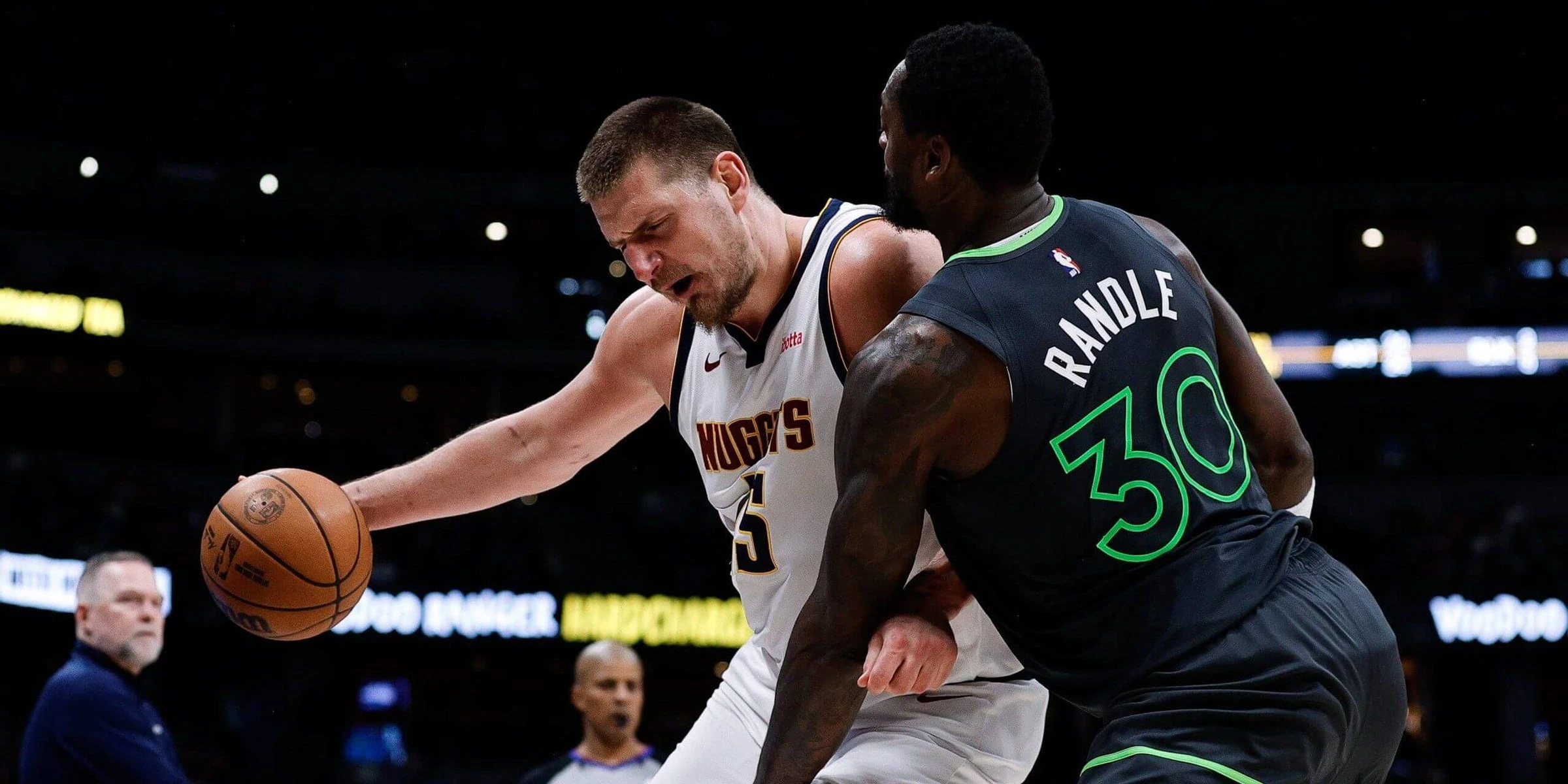
Nikola Jokic faced a variety of defensive looks during the first two games of Denver’s opening-round series against Minnesota.
One moment that stuck out was captured in a video on X, showing Jokic absorbing repeated pokes to his torso from Timberwolves forward Julius Randle while trying to post him up.
Despite the physicality of Jokic taking some pretty hard pokes, he managed to stay composed. It’s hard not to question the referees’ decisions, though, especially since no fouls were called on that sequence. The Timberwolves ended the game with 30 fouls called against them, whereas the Nuggets had only 24.
In Game 2, Jokic shot 8-for-20 from the field, ending with 24 points, 15 boards, and eight assists, plus a flawless 7-for-7 at the free throw line.
On the defensive side, Jokic gave credit to Rudy Gobert for his strong showing against him in Game 2. While many struggled to contain Jokic, Gobert seemed to turn it into a fairly straightforward task, forcing the three-time MVP into difficult shots throughout.
Jokic praised Gobert’s defence, describing him as a “big log” who can reach the ball from almost any angle, making his presence felt everywhere on the court. Jokic also mentioned how Gobert’s defence extended all the way to the three-point line, which was evident since Jokic made just one out of seven attempts from beyond the arc.
It’s worth noting that Gobert’s solid defensive game came on a day when he was overlooked for Defensive Player of the Year honours, finishing fourth behind the likes of Victor Wembanyama and others.
For most of the second half, Gobert dealt with foul trouble, leading Julius Randle, Jaden McDaniels, and Naz Reid to rotate on guarding Jokic, each with varying degrees of success.
In the end, Minnesota managed to close out the game, with Jokic unable to find his rhythm late, missing his usual floaters, which kept the series tied heading into Game 3.
Now, with the win under their belt, the Timberwolves head back to Minnesota carrying some momentum as the series shifts back home for Games 3 and 4.
The next chapter kicks off on Thursday, April 26, at 9:30 p.m. Eastern, live on Amazon Prime. The Target Centre is expected to be rocking, with a passionate crowd eager to see how the battle unfolds.

LAKERS ON THE BRINK: LEBRON JAMES ADMITS DISAPPOINTMENT AFTER 3-0 SERIES DEFICIT
"We still have life." LeBron James remains defiant despite a brutal 131-108 loss to OKC at the Crypto.com Arena on Saturday.
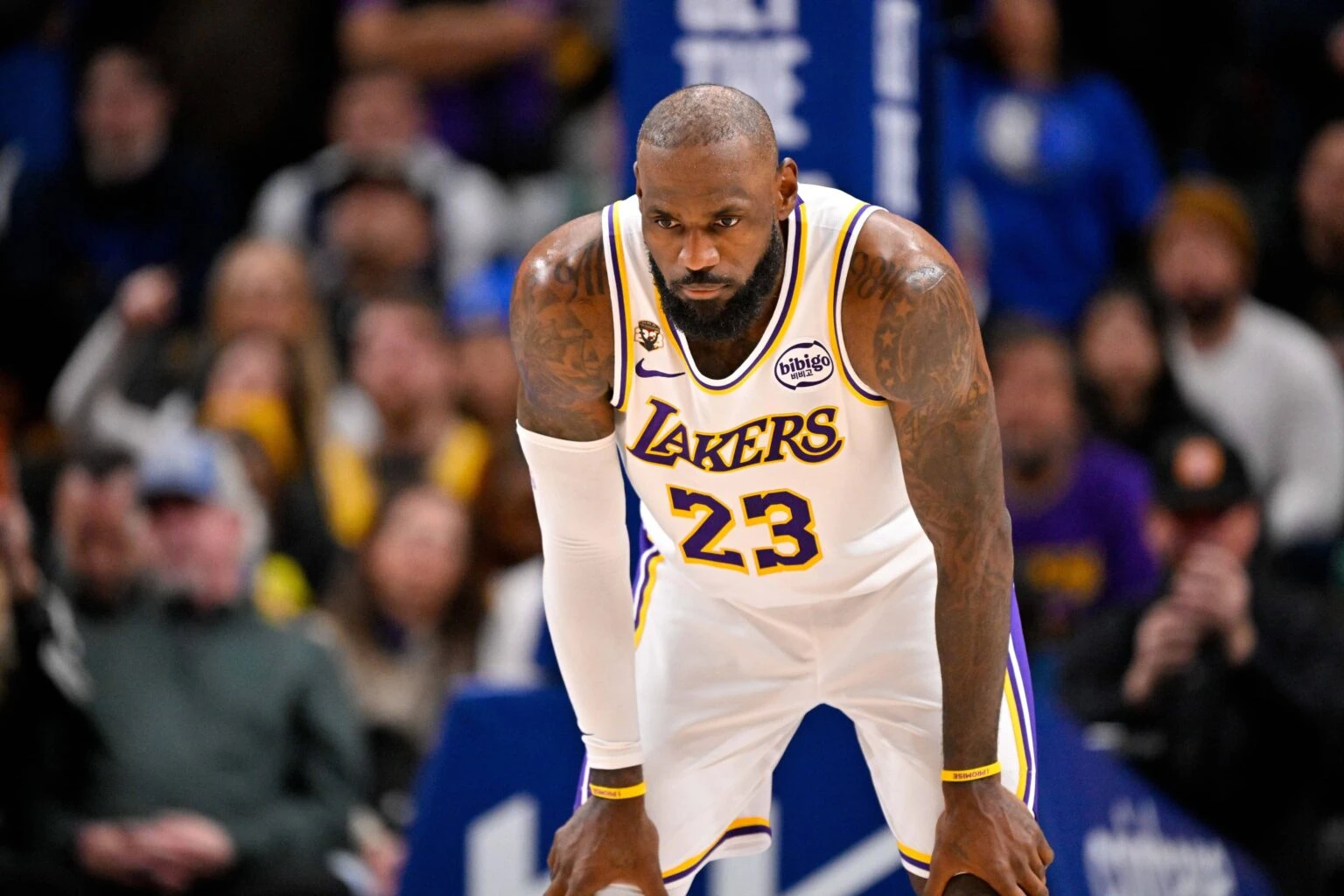
The Los Angeles Lakers find themselves just one loss away from elimination after a tough 131-108 defeat to the Oklahoma City Thunder in Game 3 of the Western Conference semifinals at Crypto.com Arena on Saturday night. Although the Lakers held a halftime lead for the second consecutive game, they again fell apart in the second half, allowing Oklahoma City to cruise to a 3-0 series lead.
LeBron James spoke after the game, highlighting the Thunder’s depth and relentless energy while emphasising that the Lakers still believe they have a chance to push the series further. The Thunder outscored Los Angeles 74-49 after halftime and once more dominated the third quarter, continuing a pattern that has largely defined this series.
“They’re solid from top to bottom,” James said after the game. “And they never take their foot off the gas.”
Oklahoma City converted at a 56 per cent clip and spread the scoring load, even though reigning MVP Shai Gilgeous-Alexander was only 7-of-20 from the field with 23 points. The Thunder’s supporting players reinforced the effort alongside Chet Holmgren, Ajay Mitchell, Jared McCain, and Alex Caruso.
LeBron pointed directly to the third quarter as the turning point for Game 3.
“Obviously, the third quarter is where it starts,” he noted. “We lacked the energy and effort, and they dropped over 30 points on us.”
Despite strong first-half performances from Rui Hachimura and Luke Kennard, giving Los Angeles a one-point lead at halftime, Oklahoma City seized control right after the break, forcing turnovers and capitalising on easy transition baskets.
“In that third quarter, we couldn’t hit shots,” James admitted. “We defended but didn’t get stops, which let them take control.”
The Lakers were outscored 33-20 in that quarter alone. James managed just one field goal, while Austin Reaves went scoreless in the period.
James finished the night with 19 points, eight assists, and six rebounds, but his shooting was off at 7-for-19, and he posted a minus-24 plus-minus rating.
Los Angeles also turned the ball over 17 times, which led to 30 points for the Thunder. Oklahoma City outscored the Lakers 64-44 in the paint as well.
When pressed about the frustration of falling behind 3-0, James kept his response measured.
“I can’t say I’m not disappointed or angry,” he said. “You’re obviously disappointed being down 3-0, but we still have life. That’s all you can ask for. We have to be much better on Monday.”
Lakers coach JJ Redick backed up James’ take, describing Oklahoma City as an elite team in the NBA.
“They’ve beaten us three straight games,” Redick said. “They’re a really impressive basketball team.”
Redick previously drew comparisons between the Thunder and dominant teams like the 1990s Chicago Bulls and the 2017-18 Golden State Warriors. James acknowledged Oklahoma City’s versatility and depth, which have caused significant matchup problems.
“They have the right personnel to adapt to whatever you throw out there,” James said. “And they stay productive no matter who’s on the floor.”
Even with Gilgeous-Alexander’s uneven scoring, the Thunder have continued to win comfortably. Holmgren’s inside presence has been dominant, and Mitchell once again put up a strong stat line with 24 points and 10 assists.
James wasn’t surprised by the Thunder’s sustained pressure, given their roster makeup.
“You’ve seen them develop over the years,” he said. “They have a lot of players who can do multiple things, and that depth really helps.”
The Lakers are still without Luka Doncic, sidelined with a Grade 2 hamstring strain from April, which has hampered their offensive rhythm, especially late in games.
Facing elimination now, James insisted the team’s focus remains squarely on Game 4 rather than any bigger questions about the group’s future.
"No", James said when asked if they considered this might be their last run together. “We’re just concentrating on the moment and moving forward from there.”
Game 4 is set for Monday night in Los Angeles, where the Lakers will fight to avoid a sweep and keep the series alive before heading back to Oklahoma City.
MAX HOLLOWAY BREAKS SILENCE ON PARAMOUNT REGARDING CONOR MCGREGOR UFC 329 RUMORS
Relive the 13-year history between Holloway and McGregor as the Hawaiian star targets International Fight Week for ultimate revenge.
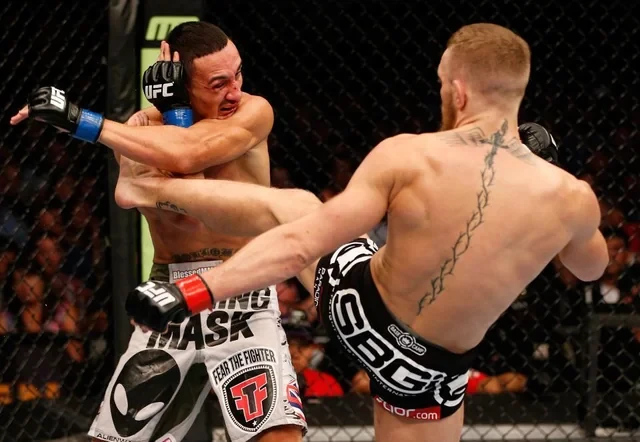
Max Holloway is hungry for payback against Conor McGregor as rumours swirl about a rematch.
McGregor hasn’t stepped inside the octagon since that quick loss to Dustin Poirier at UFC 264 in 2021. His last win was way back in 2020 when he steamrolled Donald “Cowboy” Cerrone in under a minute. He was supposed to fight Michael Chandler in 2024, but that fell through after he got injured.
Now, at 37, McGregor’s back in training and eyeing a return for UFC 329 on July 11, right as International Fight Week rolls around. Before that, he missed out on a shot at the White House card, so this July date is shaping up to be his next window.
Dana White has flip-flopped a bit on McGregor’s comeback, but now he sounds confident: “It’s looking good. Believe me, you know once we get a deal done with him, we will announce it.” And right now, Holloway looks like the top pick for the fight, 13 years after they first went at it.
Back then, McGregor beat Holloway by decision. Since then, Holloway’s had his own ups and downs; he lost the BMF belt to Charles Oliveira in March and hasn’t fought since. Still, he’s eager to get back, especially if it means a shot at Conor.
Talking to Paramount, Holloway laid it out: “We have history. We fought a long time ago. If someone’s got a win over me, I want that back. If he really is serious about returning, and it looks like he is, then this is an exciting fight. He looks hungry. He even did a boxing exhibition not too long ago, so it looks like he’s really coming back. I just want another shot. Any fight with Conor is huge, but with our past? It means even more. If I can knock a few names off my list, that’s great.”
For now, Holloway hasn’t heard anything official from the UFC about July. "Maybe we'll see what happens,” he said. “I’m seeing all the same talk you are. I haven’t heard anything yet, but July would work for me. They say you’re only as good as your last fight, and I want people to forget about that one as soon as possible.”