
ETO’O VS. BRYS: IS INTERNAL CHAOS SABOTAGING CAMEROON’S AFCON HOPES

With two rival squads named and superstars like Andre Onana sidelined, can Cameroon overcome institutional chaos to win AFCON?
_1765964928.webp)
Few teams arrive at the 2025 Africa Cup of Nations with as much drama surrounding them as Cameroon.
Once a dominant force in African soccer, the Indomitable Lions' preparation for the tournament in Morocco has been overshadowed by power struggles, coaching changes, and squad controversies, threatening to derail their chances before they even take the field.
In the weeks leading up to the AFCON, Cameroon has been dealing with a major internal conflict. Marc Brys, a Belgian coach appointed by the Ministry of Sport, publicly rejected his dismissal, even though the president of FECAFOOT, Samuel Eto’o, had declared him fired back in April 2024.
Brys argued that he hadn't received official notice of his termination from the president. He insisted that he was still the head coach and submitted his own squad list, including stars like Andre Onana and Vincent Aboubakar, before the AFCON deadline.
At the same time, FECAFOOT appointed David Pagou as the new coach and announced a 28-man squad that excluded big names like Onana and Aboubakar, along with other experienced players.
This has resulted in two different squads and no clear leadership as the tournament approaches. The situation has drawn the government in and caused an uproar in the media, with accusations of mismanagement and vendettas.
Big Names Left Out
The absence of certain players is hard to ignore. Andre Onana, the Manchester United goalkeeper currently on loan at Trabzonspor, is one of Africa's most well-known goalkeepers, but he's been left out of Pagou's squad.
The exclusion of Vincent Aboubakar, Cameroon's longtime captain and a key goal scorer, is particularly controversial.
Some reports suggest that internal politics, possibly related to Eto’o’s legacy as Cameroon’s all-time top scorer, may have influenced the decision to drop Aboubakar, who is close to breaking that record.
Experienced players like Andre-Frank Zambo Anguissa (injured) and Michael Ngadeu are also missing, leaving a squad with a mix of up-and-coming talents and overseas-based professionals like Bryan Mbeumo and Carlos Baleba.
A History of Problems
Cameroon's decline from being a top team in Africa has been happening for a while.
Despite being a historically great soccer nation and the first African team to reach a World Cup quarter-final, the Indomitable Lions have struggled to maintain consistency.
Although Cameroon has appeared in the most World Cups out of any African country (8 times), they have missed the last three tournaments, including the 2026 FIFA World Cup, after losing to DR Congo in the qualifiers. Each failure has damaged the reputation that once made Cameroon a feared opponent.
At the AFCON, their success since their surprising win in 2017 has been inconsistent. They were knocked out in the round of 16 in both 2019 and 2023, which was disappointing for a team with five titles.
However, they had a brief resurgence at the 2021 AFCON on home soil, finishing third with the help of strong support and moments of individual brilliance.
As a result, Cameroon enters AFCON 2025 not as a favourite, but as a team with a rich history that's capable of upsetting strong opponents if they can regain momentum and confidence.
Echoes of 2017: Can Chaos Help?
There is a past example of Cameroon overcoming internal problems. In the 2017 AFCON, despite facing challenges, the Lions managed to win the tournament, defeating Egypt 2-1 in the final.
Back then, coach Hugo Broos made bold decisions and enforced discipline after several players—Joel Matip, Alan Nyom, Eric Maxim Choupo-Moting, Guy N’Dy Assembé, Maxime Poundjé, Andre Onana, André-Frank Zambo Anguissa, and Ibrahim Amadou—were unavailable for selection.
There are similarities between Broos in 2017 and Pagou in 2025. Like Broos, Pagou lacks experience coaching a national team and is stepping into a situation where several big-name players are missing.
Broos was an outsider who inherited a young squad that many thought had been weakened by withdrawals.
Instead, he saw an opportunity. By enforcing clear rules, demanding discipline, and changing the team's mentality, Broos turned a divided group into a united team that defied expectations to win the AFCON.
Pagou is now in a similar position. He's a respected figure in Cameroon's domestic soccer scene, taking charge during turmoil and political tension.
His squad is young, with fewer egos and a lot of hunger to succeed. This situation once worked to Broos’ advantage. Known for his structure, discipline, and ability to manage players, Pagou has what it takes to build team unity quickly.
Like in 2017, success may depend more on unity and clear roles than on star power.
Tough Road Ahead in Group F
Cameroon's path will be challenging. Drawn into Group F with the defending champions, Ivory Coast, Gabon, and Mozambique, the Lions must beat strong opponents to advance.
Without clear leadership and with key players missing, they may struggle. However, Mbeumo's skill and Baleba's energy provide some hope.
If Pagou can create unity and get the most out of his squad, a good run is possible—but winning the title will depend on quickly resolving the team's internal issues.
It remains to be seen whether Cameroon’s problems will lead to unity or weigh the team down.
As the tournament in Morocco approaches, one thing is clear: Cameroon’s story will be one of the most interesting and unpredictable of the competition.

THE HIDDEN MATH BEHIND FIFA’S $33,000 WORLD CUP FINAL TICKET PRICE SURGE

Gianni Infantino defends $32,970 ticket prices at the Milken Institute, citing the US market as the world's most developed.
FIFA just tripled the price of its top tickets for the World Cup final, now charging $32,970 for the best seats at the July 19 match at MetLife Stadium in New Jersey. On Thursday, those front-row “category 1” seats popped up for sale, right as members of Congress started pushing FIFA for answers about high prices and demanding more transparency on how tickets are being priced.
Before, the highest category 1 ticket for the final topped out at $10,990. Now, the only way to snag that price is if you need a wheelchair or special-access seat; otherwise, you’re looking at the new, much steeper cost.
Prices don’t stop there. For the July 14 semifinal at AT&T Stadium in Texas, seats are $11,130, $4,330, $3,710, and $2,705. The next day’s semifinal in Atlanta? $10,635, $3,545, and $2,725. U.S. group stage matches aren’t cheap either; opening night in California runs $2,735, $1,940, or $1,120 a seat. The June 19 clash against Australia in Seattle sits at $2,715. And for the finale against Türkiye back in LA, tickets range from $2,970 down to $840.
Representatives Nellie Pou and Frank Pallone Jr, both Democrats from New Jersey, fired off a letter to FIFA’s president Gianni Infantino, calling FIFA’s use of “dynamic pricing” too secretive and criticising practices that make it tough for regular fans to get seats. Their letter didn’t mince words: “We’re deeply concerned about FIFA’s opaque pricing and shifting rules. Fans are getting frustrated and feel misled. We want to know how FIFA ensures everyone can actually afford to attend and what’s being done to address these concerns.”
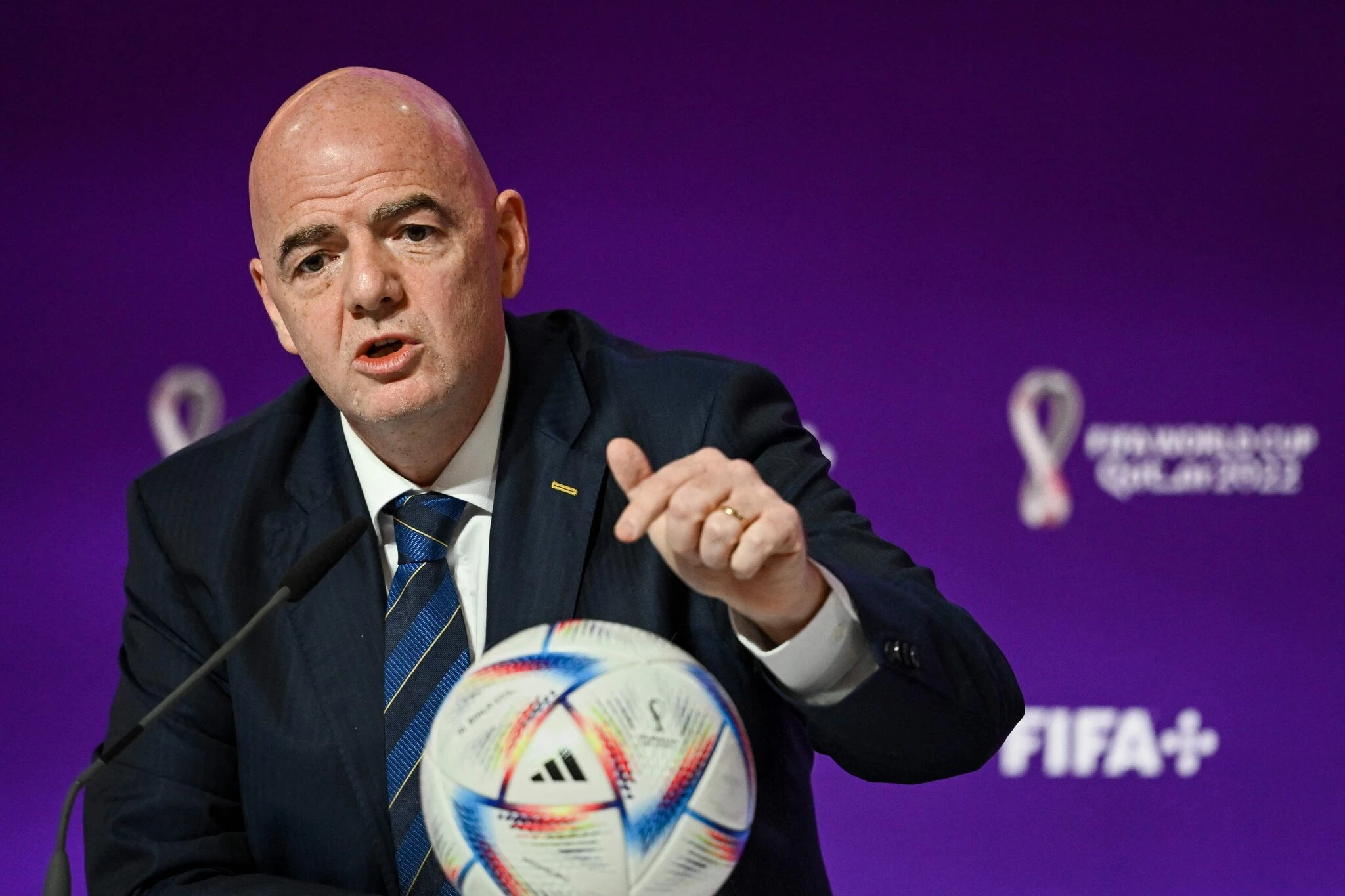
Gianni Infantino hasn’t backed down. On Tuesday at the Milken Institute Global Conference in Beverly Hills, he defended his price tags. “We have to look at the market,” Infantino said. “This is the most developed entertainment market anywhere, so we charge market rates. Tickets here can legally be resold, so if you price them low, people just flip them for more. In fact, even with what some call high prices, tickets end up reselling for twice as much or more.”
He also pointed out, “You can’t go to a college game in the U.S., never mind a pro one, without spending at least $300 for a decent ticket.”
Sure, tickets for huge events like the Super Bowl or the College Football Championship can hit these levels, but scores of seats at U.S. college and pro sporting events, even the NBA playoffs, still go for under $300.
When it comes to resale, FIFA doesn’t set those prices. On its official ticket exchange, final match seats were listed Thursday from $8,970 all the way up to a wild $11,499,998.85, the latter for a spot four rows from the top in the upper deck. FIFA takes 15% of each sale from both buyer and seller. Last month, somebody listed a final ticket for $2,299,998.85.
Infantino joked about those prices: “If people list final tickets for $2 million, number one, that’s not the actual price. Number two, who’s paying that? If someone does, I’ll personally deliver them a hot dog and a Coke.”
Ticket prices aren’t the only pain point for fans. Getting to the game, especially at MetLife Stadium, has its own sticker shock. NJ Transit originally set a $150 round-trip fare from anywhere to the stadium, way up from the normal $13-ish round trip from Manhattan’s Penn Station. After plenty of backlash, they cut it down to $105, but that’s still steep.
Governor Mikie Sherrill, via her spokesperson Steve Sigmund, said she’s pushing for more corporate contributions to lower fares for fans. “The governor is grateful for the companies helping reduce costs and will keep working to make the World Cup a win for both fans and New Jersey.”
FIFA, for its part, warned that these high transit prices could dampen turnout in New Jersey, while other host cities, LA, Dallas, and Houston, aren’t hiking fares for the games.
MetLife Stadium, usually home to the Giants and Jets, will host eight World Cup matches, including the final. Group stage games for powerhouse teams like Brazil, France, Germany, and England all kick off starting June 13.
FIFA EXTENDS PRESTIANNI BAN WORLDWIDE; WINGER SET TO MISS WORLD CUP OPENERS
Gianluca Prestianni will miss games against Algeria and Austria if selected by Scaloni. Get the full disciplinary breakdown.
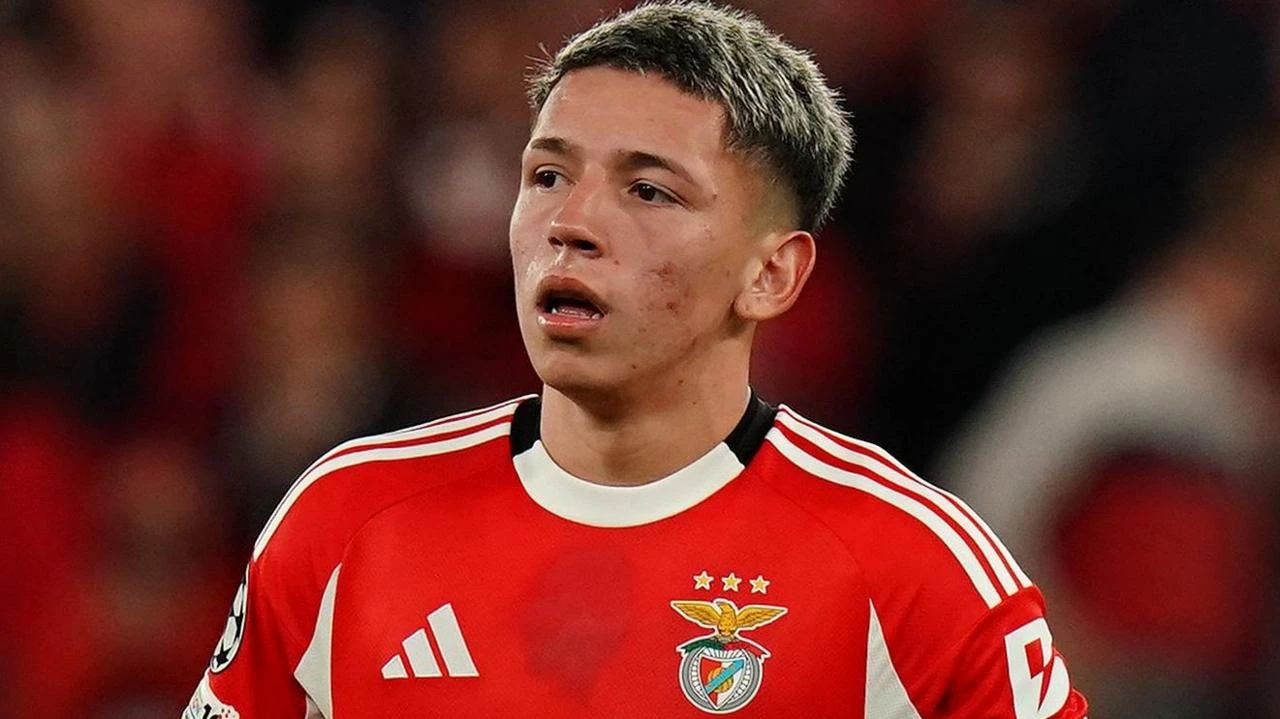
FIFA has extended Gianluca Prestianni’s suspension for homophobic conduct to apply globally, which could sideline him for Argentina’s first two matches at the 2026 World Cup. The winger from Benfica, initially punished after a well-publicised incident with Real Madrid’s Vinícius Júnior, will now have his ban affect not just club matches but international competitive games as well.
The disciplinary move by FIFA follows a request from UEFA, and the FIFA Disciplinary Committee has confirmed the six-match ban will take effect worldwide. According to a FIFA spokesperson, the committee agreed to broaden the suspension’s scope, impacting all levels of competitive play.
This decision carries serious implications for both Benfica and Argentina. What was once a suspension limited to UEFA competitions now bars the 20-year-old from participating in any FIFA competitive events, including the upcoming World Cup in North America.
If Prestianni makes Lionel Scaloni’s final Argentina roster for 2026, he will be forced to sit out the opening group stage games against Algeria and Austria. Despite this setback, he remains eligible for friendlies; he was actually called up earlier this year for matches against Mauritania and Zambia following his November 2025 senior debut.
While the ban totals six matches, half of those come with a two-year probationary clause. After missing a Champions League match against Real Madrid under a provisional suspension, Prestianni still has two active games left to serve. Notably, domestic games with Benfica this season are unaffected, since the worldwide ban targets only competitive international fixtures.
The incident that triggered this whole saga happened on February 17 during a Champions League knockout match at Estadio da Luz. Vinicius Junior accused Prestianni of racial abuse, prompting referee Francois Letexier to pause the game for eight minutes and activate FIFA’s anti-discrimination protocol.
Prestianni has denied these accusations and issued a statement saying he never directed racist insults at Vinicius Junior, suggesting the player misunderstood what was said. He also condemned the threats he received from Real Madrid players in the aftermath.
Despite his denials, UEFA’s investigation concluded that Prestianni engaged in discriminatory, specifically homophobic, conduct, leading to his suspension.
Questions remain about the length of the ban, as UEFA’s rules generally mandate a minimum 10-match suspension for offences against human dignity based on factors like race or sexual orientation. UEFA has not explained why the disciplinary body settled on a shorter six-match penalty.
Looking ahead, Prestianni faces a challenging path to regain standing under scrutiny. Should he violate conduct rules again within the probationary period, the remaining three matches of his ban could be enforced immediately, potentially harming his prospects with both Benfica and the Argentina national team.