
RUBEN AMORIM STRUGGLES AS MAN UTD BRUNO FERNANDES ISSUE PERSISTS

Manchester United's draw with Forest exposed deep flaws in Ruben Amorim's 3-4-3 system. The tactical analysis reveals a Bruno Fernandes dilemma, the need for Kobbie Mainoo, and a critical shortage of effective wing-backs at Old Trafford.
Ruben Amorim struggles as Man Utd Bruno Fernandes issue persists
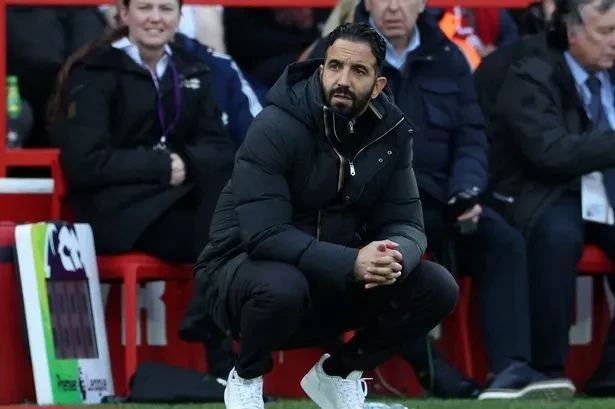
Amorim battles unseen challenge as Fernandes issue hits Man Utd - Photo Credit: Getty Images

Manchester United briefly appeared to be regaining control of the situation. Three consecutive victories, the first in almost two years, had sparked discussions about development, momentum, and Ruben Amorim's beginning to settle in.

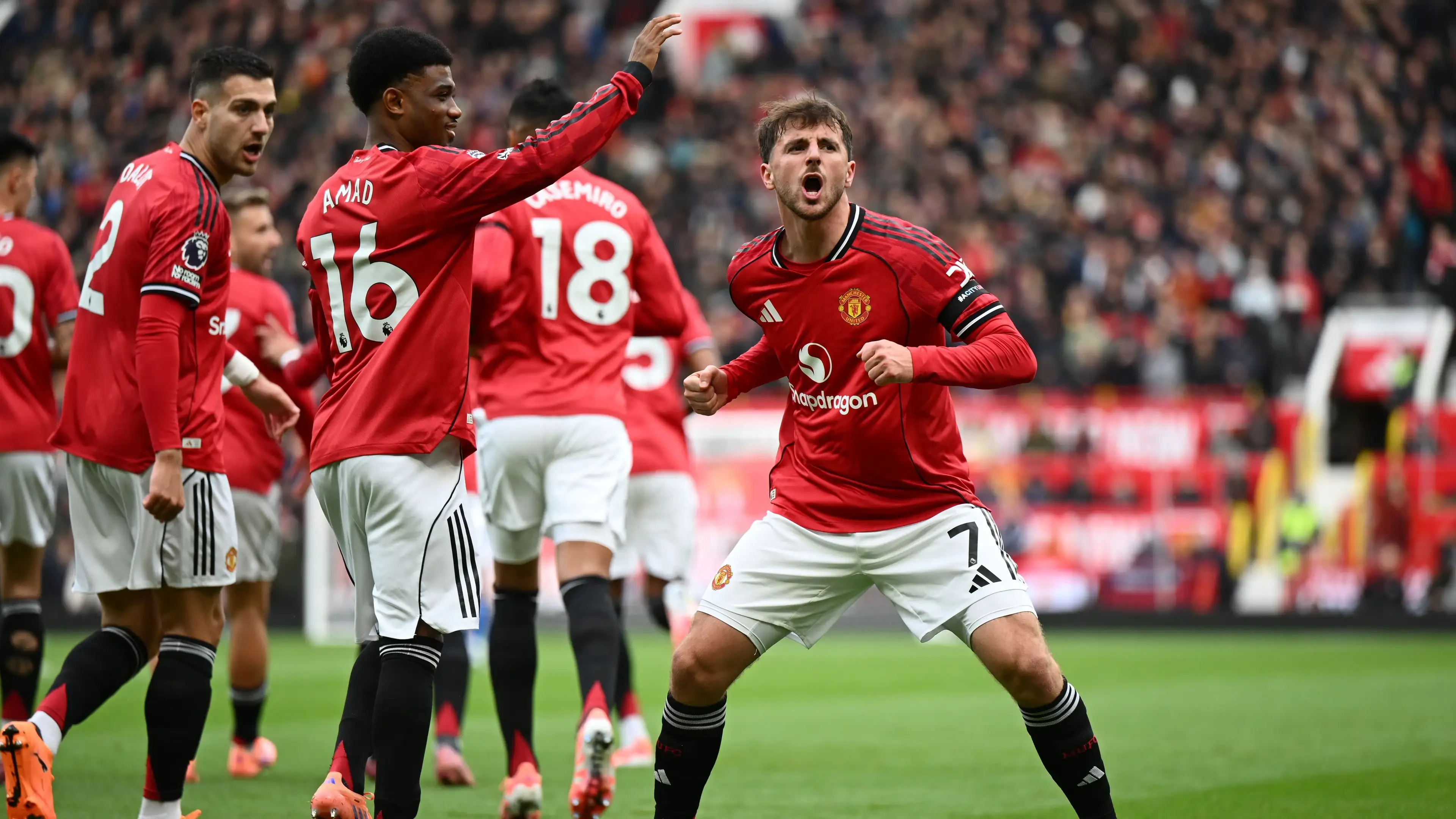
However, Saturday's 2-2 draw with relegation-threatened Nottingham Forest—which would have been a crushing loss had it not been for Amad Diallo's incredible late goal—served as a sobering reminder that United's issues go far beyond a few recent performances.

The team is still unable to dominate games for extended periods of time. When under stress, they nevertheless appear delicate. United still feels like a work in progress, a side divided between tradition and change, despite all the buzz about Amorim's new ideas and enthusiasm.

In addition to stopping momentum, the draw at Forest revealed Amorim's ungainly balance in their changing 3-4-3. When United dominates possession, the system may appear sleek, but when they are forced to defend in numbers and scrape and claw, it swiftly breaks down.

Bruno Fernandes, the captain, talisman, and possibly one of United's biggest tactical issues, is at the centre of it all. In light of that, here are three things to remember from United's concerning weekend.

The issue of Fernandes


As one of the two centre midfielders in Amorim's 3-4-3, Fernandes has been comparatively successful. His inventiveness and deft passing may be crucial when United is ahead and has possession of the ball. However, his presence in that role becomes a problem in more difficult away games, such as Forest.

He lacks the discipline to keep shape and the mobility to cover territory, leaving United's midfield vulnerable. It reminds me of Cesc Fabregas at Chelsea under Antonio Conte, who was a good football player but too light for the structure and energy needed in a two-man midfield. Chelsea gained balance and eventually won the Premier League as a result of Conte's choice to give preference to N'Golo Kante and Nemanja Matic.

For the time being, United might be able to use Fernandes in that capacity, particularly while playing weaker teams. However, Amorim might have to make the audacious decision to move Fernandes further forward or off the club entirely if he really wants to assemble a team that can contend for major awards.

Naturally, the issue is that promoting him could displace Bryan Mbeumo and Matheus Cunha, who both appear to be much more suited as inside forwards in this style. In addition, despite his tactical shortcomings, Fernandes is still a beloved goal scorer and talisman for United, one of the few players whose form has remained consistent over the past several tumultuous seasons.

However, if Amorim continues, so will his 3-4-3, and Fernandes will feel more and more out of place in it. Some will believe he's too excellent to drop and worth shoehorning into the side - but pushing him into a role that doesn't fit him could eventually cost United when it matters most.

Although it is a difficult puzzle to solve, the Red Devils must be prepared to omit even the largest piece if doing so makes the entire picture fit together better, if they genuinely want to be a top team once more.

Mainoo is essential.


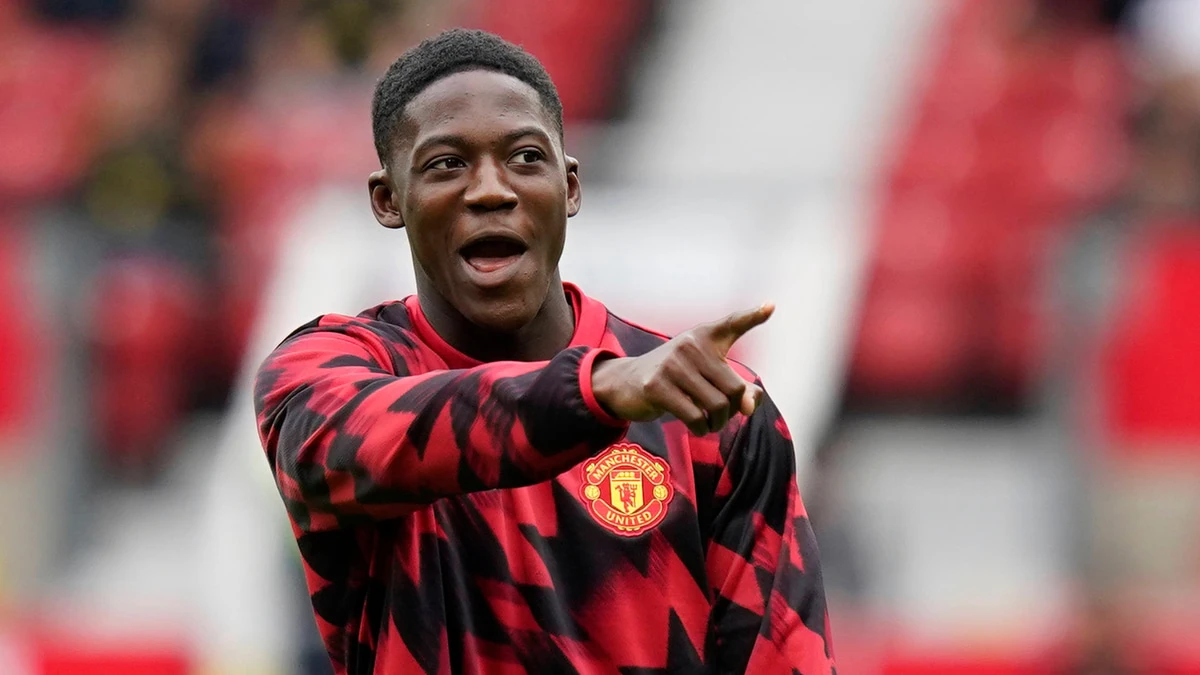
One player must be a member of United's midfield if it is to be effective: Kobbie Mainoo. The 20-year-old gives United a unique combination of poise, agility, and intellect that they desperately lack. He possesses the discipline to defend his back line while gliding past a push and moving the ball forward purposefully.

You need balance, control, and vigour to make a 3-4-3 work. Mainoo meets all of those requirements, thus it makes perfect sense to partner him with a real holding midfielder like Casemiro, Manuel Ugarte, or a summer acquisition like Carlos Baleba.

Many people have been perplexed by Amorim's choice to exclude him. Mainoo might be the difference in games where United finds it difficult to manage the pace. Mainoo provides rhythm, a sense of peace that lets others play, while Fernandes brings risk. Reintroducing the young player should be Amorim's first move if he wants to build a midfield that can dictate the game rather than just respond to it.

In addition to structure and discipline, two-man midfields require energy—the capacity to cover ground, press strategically, and recover swiftly during transitions. Amorim appears to be committed to partnering Casemiro with Fernandes, but that lineup just does not have the passion and agility needed to compete with the best.

Casemiro no longer possesses the legs necessary to control wide areas by himself, while Fernandes excels at creating chances and being creative rather than playing defence or recovering the ball. United's midfield, which is strong on paper but slow in practice, runs the risk of being overrun without a more energetic partner like Mainoo.

Wing-backs are required.


The other obvious problem is widespread. Wing-backs are crucial to Amorim's 3-4-3 because they can stretch the field and play smart defence. United currently lacks both.

The only obvious choice is Patrick Dorgu, although he has not always been reliable. Diogo Dalot, who is right-footed, is still filling in on the left, while Amad is being squandered at right wing-back. It is a clumsy arrangement that makes United much too vulnerable during transition and far too direct moving ahead.

Finding suitable wing-backs must be the focus of the January transfer window and the following summer if United is serious about making this formation work. Players with the ability to recover fast, deliver quality, and bomb forward. Last summer, they spent more than £200 million on forwards when it would have made much more sense to spend £50-100 million on two top-tier wing-backs.

They are now being connected to high-priced midfield players like Elliot Anderson and Baleba. However, the building will continue to collapse unless the flanks are fixed. The technique relies on balance, and Amorim will continue to try to construct a house without walls until United finds suitable wing-backs.

UNITED BOARD SPLIT OVER CARRICK VS LUIS ENRIQUE FOR PERMANENT MANAGER ROLE

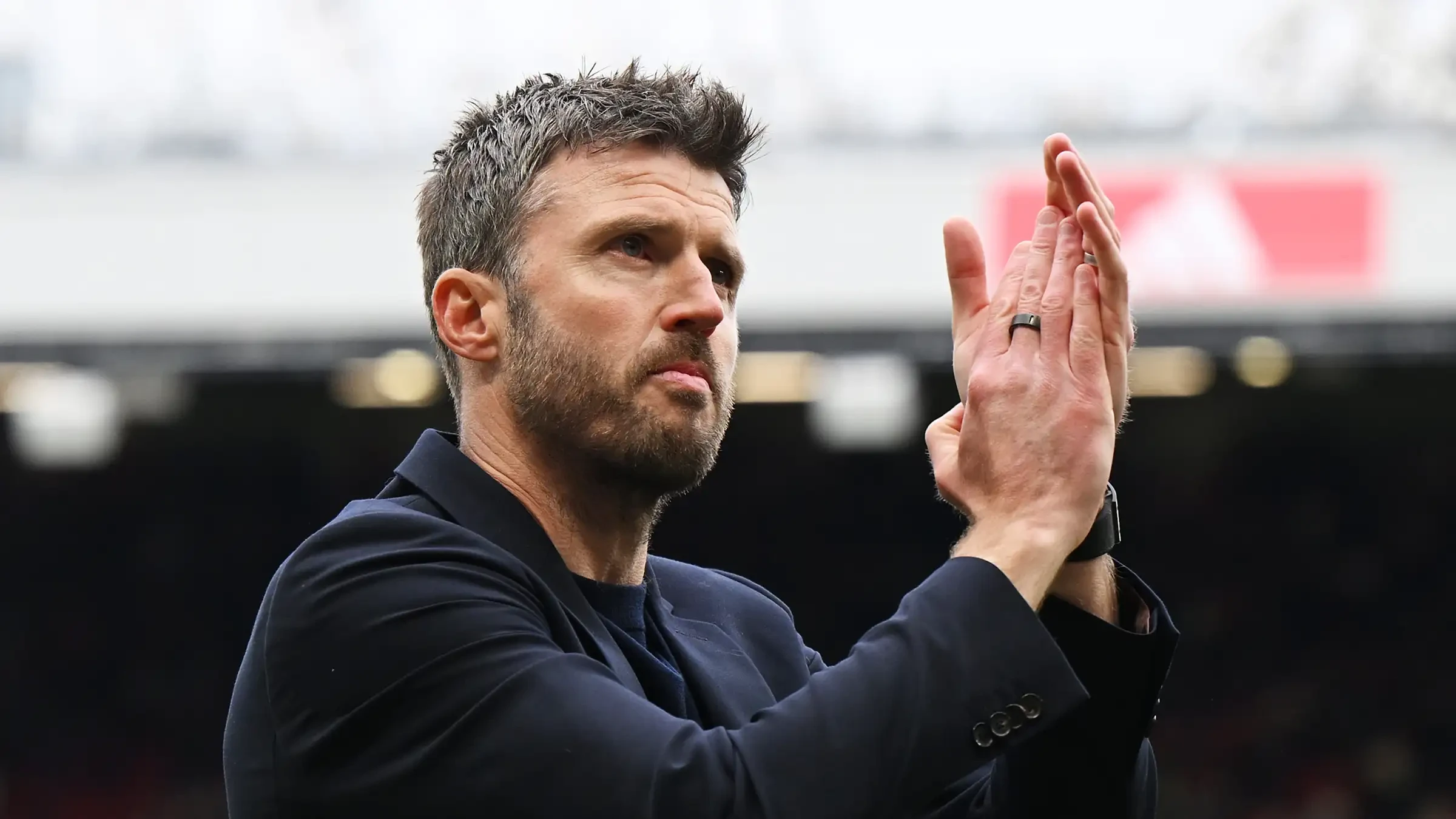
From 7th to the Top 4: Analysing Michael Carrick’s tactical masterclass and his chances at the permanent Man Utd job in 2026.

top-news
Carrick earns more points than Arsenal since January - Photo Credit: Getty Images

When Manchester United put Michael Carrick in charge back in January, the message was pretty clear: get us into the Champions League and we’ll call it a win. Honestly, with only one competition left, that was the goal. On Sunday, after a wild 3-2 victory against Liverpool, Carrick delivered. United booked their Champions League spot with three games still to play. A draw would’ve done the job, but a win feels sweeter.

Still, no one at Old Trafford promised Carrick the gig beyond this season just for pulling that off. When Carrick arrived, everyone figured he’d be here till May, plug the gaps, keep things steady, and then step aside for someone else.

But the way things have played out, it’s not so simple. Carrick’s done well enough to put himself in the mix, maybe even to stay on as coach next season.

The decision isn’t so straightforward, though. Let’s break down the arguments for and against making Carrick the permanent manager.

Why Carrick Might Not Be the Right Call

Look, there’s no denying he delivered. If United end up third, you can’t really ask for more this season. The tough part is his resume. Before this, Carrick managed for a short stretch in the Championship and half a season at United. If we pretend he’s not a club legend and just another guy who snagged a top-four spot after four months, would he be in the conversation for the United job? Not a chance.

Handing him the reins screams “safe pick” instead of real ambition. The new owners keep talking a big game about restoring United to their past glory, chasing the biggest names in coaching. If you want to show rivals you’re serious, you don’t usually go for the rookie manager with a feel-good story; you go big, like someone with Luis Enrique’s CV.

To be clear, Luis Enrique is just one example. There are plenty of coaches out there who would be considered heavy hitters and would make United’s rivals nervous. Appointing Carrick doesn’t really send shockwaves through City, Arsenal, or anyone else.

Beyond that, United under Carrick haven’t been flawless. Lately, their expected goals numbers have dipped, and that second half against Liverpool, where the team completely fell apart after going 2-0 up, leaves plenty of questions. They lost control and discipline, especially in the middle of the park.

And don’t forget this has an all-too-familiar feel for United fans. Ed Woodward, the club’s old executive vice-chairman, made a similar move with Ole Gunnar Solskjaer: brought in a former player as caretaker, then kept him on permanently. People never shook the feeling that a more experienced manager could have taken the club to new heights. In the end, the club settled for comfort rather than reaching higher. It’s easy to spot the same pattern forming if Carrick gets the job full-time.

Why Carrick Makes Sense

But, honestly, if you look closer, what Carrick’s managed should get some credit. He didn’t just reach the Champions League; he did it with authority.

Back in January, United were seventh – not out of the race, but sitting eleven points behind City and Villa. Fast forward to now, and they’re not just in the top four; they’re ahead of Villa by six points, and they’ve already wrapped things up with games to spare. Carrick’s team beat all the other Big Six clubs and the rest of the current top five.

Since he took over, United have picked up more points than anyone else in the league. Yes, City have a couple of games in hand and could squeak ahead, but Carrick’s work stands out. Arsenal, meanwhile, have actually dropped more points in the same period.

What’s crazy is that he’s done this with almost the same squad Ruben Amorim had. Amorim was rigid, stuck to his system; Carrick’s been flexible, playing people where they thrive. He shifted away from Amorim’s three-at-the-back setup, freeing Bruno Fernandes to roam and influence games. Bruno looks like he could win Player of the Season. The change also let Kobbie Mainoo shine; he’s become a regular and signed a new deal, which is wild when you remember how little he played under Amorim.

That tells you two things: Carrick and his coaches know how to get the best out of this squad, and the players are totally behind him. Mainoo even said after beating Liverpool, “You want to follow him and fight for him and die for [Carrick] on the pitch.” Not much clearer than that.

For the club, keeping Carrick around feels like low risk. The players trust him; he knows the lay of the land, and you avoid the drama that comes with shaking up the whole operation, something the board might appreciate after the Amorim saga.

Plus, with United watching the bottom line, Carrick won’t break the bank. They can probably give him a short contract and keep their options open. If you try that with a coach like Luis Enrique, you’ll likely get shot down.

And let’s not ignore the timing. 2026 is a World Cup year, and if United find some momentum, they won’t want to throw it away by gambling on a new manager right before the tournament. If they do look elsewhere, it’ll probably be someone easy to hire right at the end of the season.

Andoni Iraola is a name people bring up, but after the Amorim experience, United may be wary of going for another up-and-coming coach. At least with Carrick, you know what you’re getting.

Right now, Carrick’s earned the right to be in the conversation. If United pass him over, it’ll just show they never really believed he was their guy long-term because, honestly, he’s done almost everything possible to prove himself.

PATRICK DORGU HITS BACK AT RUBEN AMORIM’S "ANXIOUS" COMMENTS IN NEW INTERVIEW

Patrick Dorgu addresses Ruben Amorim’s "anxiety" comments, crediting Michael Carrick for his Manchester United resurgence and form.

top-news
"I wasn't anxious," says Dorgu as he defends United's form under Amorim - Photo Credit: Getty Images

Patrick Dorgu felt the sting from Ruben Amorim’s criticism after Amorim said you could “feel the anxiety” whenever Dorgu got the ball during those rough final weeks at Old Trafford.

Amorim, who had taken over after leaving Sporting Lisbon, got sacked by United in early January. The results just weren’t good enough during his 14 months in charge. Then Michael Carrick came in as the interim boss, and things started to turn around.

Back in November, after a 1-0 loss to Everton, Amorim pointed the finger at Dorgu, who’d joined from Lecce for £25 million the previous year. “You can feel the anxiety every time Patrick touches the ball,” he said. Honestly, that probably cut a bit deeper than he expected.

Four months later, and looking back, Dorgu admits Amorim’s words got under his skin, but he tried to turn them into motivation to prove himself.

“It hit me a little bit when Amorim said that,” Dorgu told The Telegraph. “When your coach criticises you, of course, it affects you. But I tried to take it in stride and improve my game.”

He was starting to hit his stride before Amorim left. When some of his teammates headed to Afcon, Dorgu found himself playing more and felt his rhythm coming back.

“I just tried to carry that confidence over to playing under Fletcher and Carrick,” he said. “I wanted to play with more freedom, just show what I could do.”

Dorgu hadn’t played since January because of a nasty hamstring injury he picked up in a 3-2 win at Arsenal, a game where he actually scored. He’d been one of Carrick’s brightest performers in those early weeks right before getting hurt.

Now, under Carrick, United are pretty much locked in for a Champions League return next season, and Carrick’s got a real shot at the permanent job. Looking back on Amorim’s comments, Dorgu feels they came when his confidence was at rock bottom, with the team struggling all around him.

“I don’t think ‘anxious’ is the right word,” Dorgu said. “It wasn’t that. I just had no confidence, and the team was struggling.”

He felt the timing of Amorim’s remarks was off, especially since he’d been playing well with his national team. “I don’t see how I can play well in one place and then be called anxious in another. I think he just said it at the wrong time.”

Read More News